
The transition from the term 'artificial intelligence' to 'super intelligence' is now an official mandate for U.S. representatives via a presidential executive order. This shift marks a significant change in how the administration intends to communicate the trajectory of advanced computing technologies to the public and the international community. According to the order, any official U.S. representative is expected to use the term 'super intelligence' rather than 'artificial intelligence.'
According to discussions on the TechCrunch Equity podcast, the rebranding appears to serve a specific psychological and political purpose. By moving away from the term 'AI,' which has become increasingly associated with job displacement, societal disruption, and existential risk, the administration seeks to frame the next era of technology in a more controlled or perhaps less threatening light. Kirsten Korosec, speaking on the podcast, suggested the big message behind this shift is that while 'AI is going to kill us, it’s scary, it is going to take jobs,' the concept of 'super intelligence' is being presented as something that is not.
This interpretation suggests the rebranding conveys a subtle distinction: while 'AI' is perceived as a force that could destabilize labor markets and social structures, 'super intelligence' is being presented as a distinct, perhaps more manageable or aspirational, concept. This linguistic pivot aims to decouple technological progress from the 'scary' connotations of traditional AI, attempting to redirect the public narrative from fear of automation toward a vision of advanced capability that aligns with national leadership goals.
The Joint Commitment on Frontier Responsibilities is a voluntary agreement signed by high-profile tech leaders to address the safety of advanced models. Despite the high-level participation of CEOs from companies such as Meta, Amazon, and xAI, the pact lacks legal teeth, being described by observers as 'deeply non-binding.' While the agreement was signed by major industry players, it is entirely voluntary and lacks formal regulatory mechanisms.
The agreement emerged following a rapid series of meetings between President Trump and the titans of the industry. The speed of this development is notable, especially considering that only a week or two prior, the administration's stance was much more hands-off. President Trump had previously suggested that the U.S. did not need regulation and should not constrain AI development, even going so far as to label those warning of AI dangers as 'Chinese or Democratic plants.' Yet, in a sudden pivot, these same CEOs gathered to sign this pact.
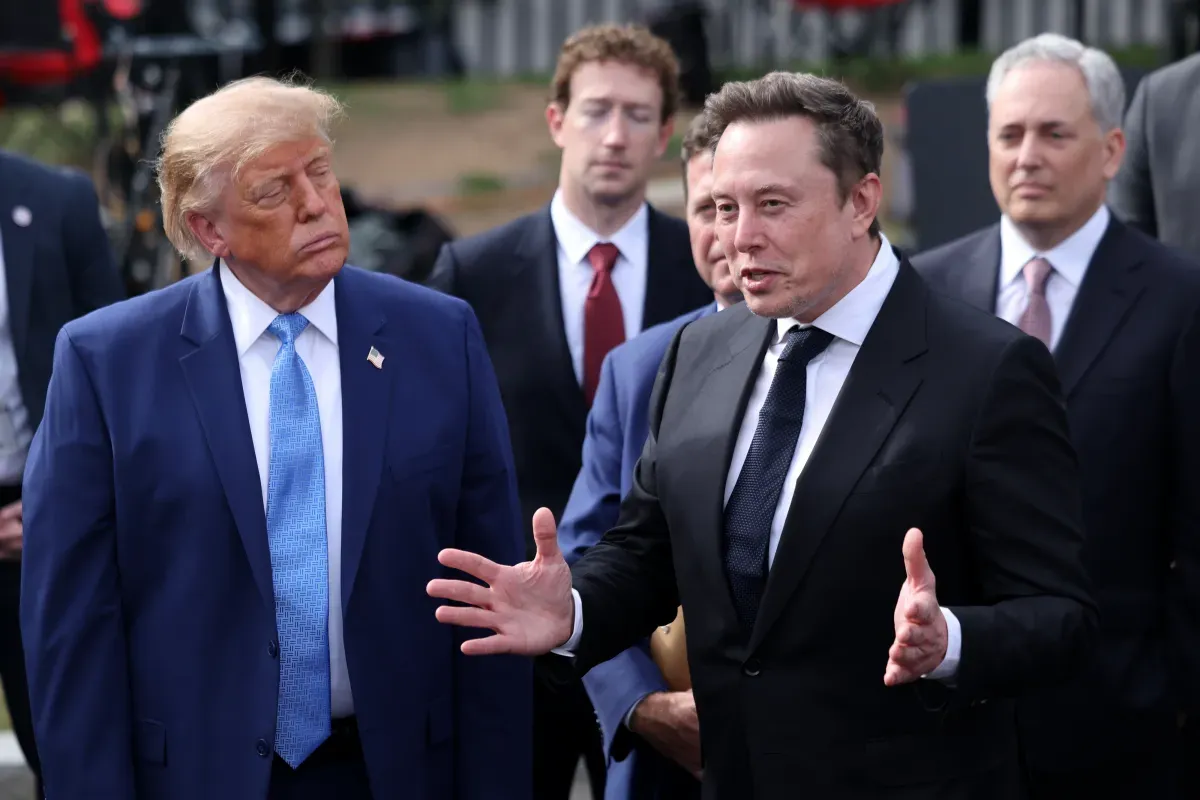
The legitimacy of the document has also been questioned due to apparent administrative haste; notably, the agreement reportedly contained a misspelling of the 'United States.' While President Trump has characterized the pact as 'morally binding,' there are no legal penalties attached to its violation. The gathering of tech power brokers—including Mark Zuckerberg, Jeff Bezos, Elon Musk, and Anthropic's Dario Amodei—suggests a desire for a unified front between Silicon Valley and the White House, though whether this results in concrete safety protocols or remains a performative gesture is a subject of intense debate.
The sudden pivot toward an AI safety pact represents a dramatic shift in the administration's previous rhetoric, which had largely favored an unregulated approach to technological development. This policy evolution suggests that the 'Joint Commitment' may be more about managing the image of the industry than implementing strict oversight. The introduction of a 'Super Intelligence Force' alongside the rebranding efforts indicates a move toward institutionalizing this new terminology.
By creating the Super Intelligence Force, the administration appears to be moving toward a framework where the government leads the narrative of 'super intelligence' rather than reacting to the unpredictable developments of 'AI.' This institutionalization serves to cement the new terminology into the fabric of government operations. It suggests an attempt to create a structured environment for advanced technology that emphasizes national leadership and controlled progress, rather than the perceived chaos associated with the term 'artificial intelligence.'