What is the core functionality of Hark Pro?
Hark Pro is designed to function as a specialized interface that uses your computer on your behalf rather than simply answering questions. Unlike many contemporary AI assistants that rely on large language models (LLMs) for general knowledge, Hark’s foundation is a model explicitly trained for computer use. This distinction allows the assistant to navigate software, websites, and digital workflows to complete end-to-end tasks.
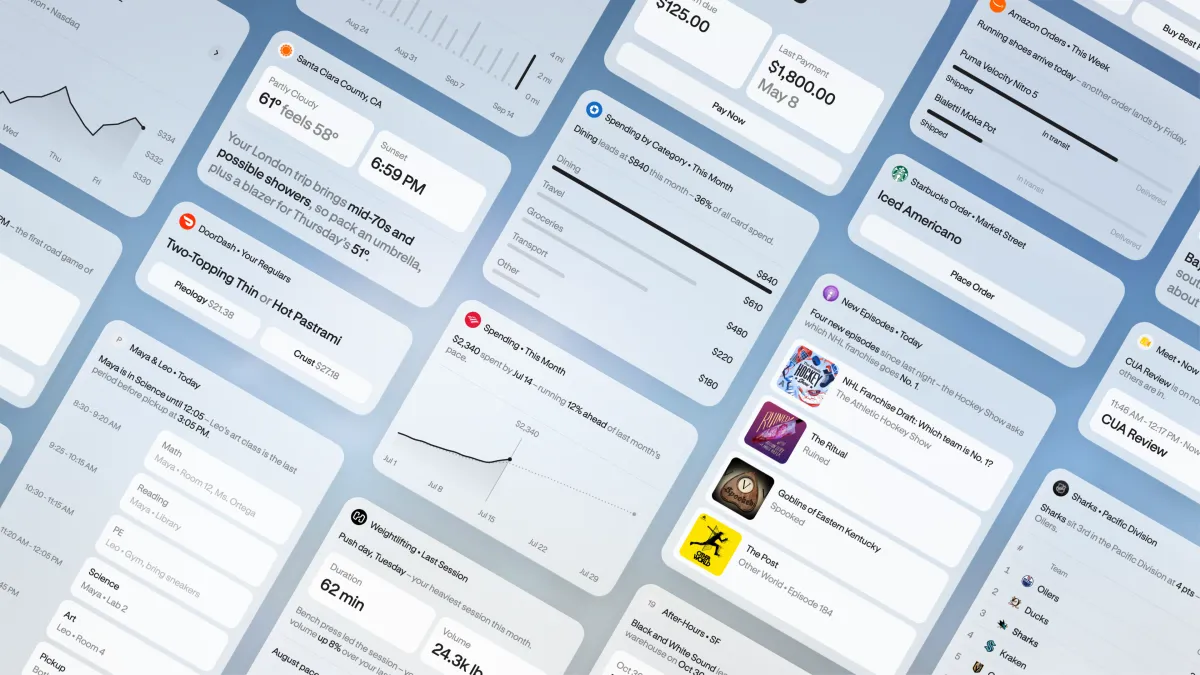
The user experience is structured as a full-screen environment that serves as a digital homepage. It features a central chat interface complemented by a dynamic feed of suggested actions and "panels"—customizable mini-dashboards that visualize specific data points of interest to the user. To enhance the sense of presence, the background imagery adapts to the user's local weather and time of day. This design choice aims to create a cohesive environment that feels less like a tool and more like a dedicated operating system for the AI era.
Bridging the gap between chat and action
While traditional chatbots require users to prompt them for information, Hark Pro is designed to be proactive. During product demonstrations, the assistant identified pending expenses, unresponded emails, and upcoming travel requirements, offering to execute the necessary bookings automatically. This move from reactive conversation to proactive agency is the central pillar of the Hark user experience.
Abidur Chowdhury, the design lead and a former Apple employee, demonstrated this capability by showing how the assistant could recognize a colleague's need to renew a car registration at the California DMV and handle the process directly through the agency’s website. This level of autonomy addresses one of the hardest challenges in AI interaction: the difficulty users face in even conceiving of useful tasks they can delegate. By identifying these needs autonomously, Hark attempts to lower the cognitive load required to interact with an AI assistant.
How does Hark address the privacy and data security challenge?
Privacy is the central differentiator in Hark's market positioning, as the company seeks to distance itself from the data-harvesting models used by major tech conglomerates. Because an effective AI assistant requires access to highly sensitive data—including email, calendars, hard drives, and financial credentials—Hark emphasizes a mission of utility over advertising. Abidur Chowdhury has stated that the company is not interested in selling advertisements or building user profiles for marketing purposes, a direct contrast to the business models of Meta or OpenAI.
To foster trust during these sensitive interactions, Hark employs a unique transparency mechanism. When the AI agent navigates the web to complete a task, the process is displayed to the user in a small, visible window. This prevents the "black box" effect common in other AI tools, allowing users to verify that the agent is performing the correct actions in real-time. This visibility is intended to build confidence that the agent is acting in the user's best interest, which is critical when the software is handling everything from credit card details to personal correspondence.
The tension between utility and profiling
Despite these safeguards, the requirement for deep integration creates an inherent tension. For the assistant to be truly useful, it must "understand" the user's digital life. While Chowdhury maintains that the AI's understanding is strictly task-related—focused on how Hark can help take something off a user's plate—the technical reality of processing such vast amounts of personal data remains a significant hurdle for widespread consumer adoption and cybersecurity confidence.
The company acknowledges that to truly leverage these models, users must be willing to share their entire digital lives. This raises questions about whether users will be comfortable with any company creating detailed profiles, even if the stated goal is purely functional. While Hark claims to be focused on utility, the scale of data required to make the product work effectively remains a point of scrutiny for the industry at large.
What sets Hark apart from competitors like Muse or OpenAI?
Hark differentiates itself by focusing on end-to-end task completion rather than speed or general intelligence. While competitors may offer faster response times or broader knowledge bases, Hark aims to provide more reliable results by ensuring the AI can handle a task from start to finish without requiring the user to intervene mid-process. This "full substitution" philosophy treats the AI as a replacement for traditional computer interaction rather than a supplementary tool.
The company acknowledges that by training specifically for computer use, they may be trading away some of the expansive reasoning capabilities found in frontier LLMs. However, the trade-off is intended to yield a more efficient and cost-effective tool for the specific purpose of digital automation. The goal is to move away from the "terminal" style of computing—where users type into a box—and toward a seamless, agentic experience that works end-to-end.
What is the future roadmap for Hark's ecosystem?
The software release of Hark Pro represents only the first phase of the company's long-term vision. The startup intends to move beyond software by developing AI-native hardware, with a planned release in 2027. This hardware is expected to provide a dedicated environment specifically optimized for the Hark operating system and its agentic workflows.
While the company remains secretive regarding the exact form factor of the device, design lead Abidur Chowdhury has indicated a desire to avoid the "creep factor" associated with current wearable technologies, such as cameras. The ambition is to create a completely new category of computing device that moves beyond the keyboard-and-screen paradigm that has dominated the industry for decades. This hardware is seen as the necessary physical counterpart to their software-driven vision of the future.
The evolution of the computing interface
Hark’s philosophy is rooted in the idea that current AI interfaces are still tethered to outdated methods of input. Chowdhury has noted the irony that even with the advent of AI, users are still largely interacting with chatbots through a keyboard and terminal-style inputs. By combining specialized software with purpose-built hardware, the company hopes to redefine how humans interact with digital systems, shifting the focus from manual input to delegated agency.
Frequently asked questions
Is Hark Pro free to use?
Yes, Hark offers a free version of its service that allows users to access the core features of the AI assistant. For users who require more intensive capabilities or higher usage limits, the company provides a dedicated subscription tier designed for heavy users.
How does Hark ensure my data remains private?
Hark positions itself as a privacy-first alternative to companies like Meta or OpenAI. The company's business model is built on providing utility rather than selling advertisements, and they aim to use personal data strictly for task-related purposes to assist the user.
Can Hark Pro actually perform tasks on websites?
Yes, the model is specifically trained for computer use, allowing it to navigate websites and interact with digital services. An example includes handling tasks like car registration renewals through agency websites by mimicking human navigation and interaction.
Will Hark release physical hardware?
Hark has announced plans to release an AI-native hardware device in 2027. This device is intended to support the Hark software ecosystem and provide a more integrated experience than current general-purpose computers or smartphones.
How is Hark different from a standard chatbot?
Unlike standard chatbots that primarily provide text-based information, Hark Pro is an agentic assistant designed to execute actions. It can access your calendar, email, and files to perform complex, end-to-end digital tasks on your behalf.
Key takeaways
Hark Pro is an AI assistant specifically trained for direct computer use and task automation.
The platform uses a full-screen interface featuring "panels" for data visualization and a proactive task feed.
A privacy-centric model distinguishes Hark from competitors by focusing on utility rather than advertising.
The company plans to launch dedicated AI-native hardware to complement its software in 2027.
Conclusion
Hark's entry into the AI market represents a strategic pivot from general-purpose intelligence toward specialized digital agency. By prioritizing computer-use training and a transparent, privacy-focused user interface, the startup is attempting to solve the friction of modern computing. Whether their specialized approach can match the breadth of frontier models remains to be seen, but their vision of a post-terminal computing era is a bold bet on the future of human-computer interaction.