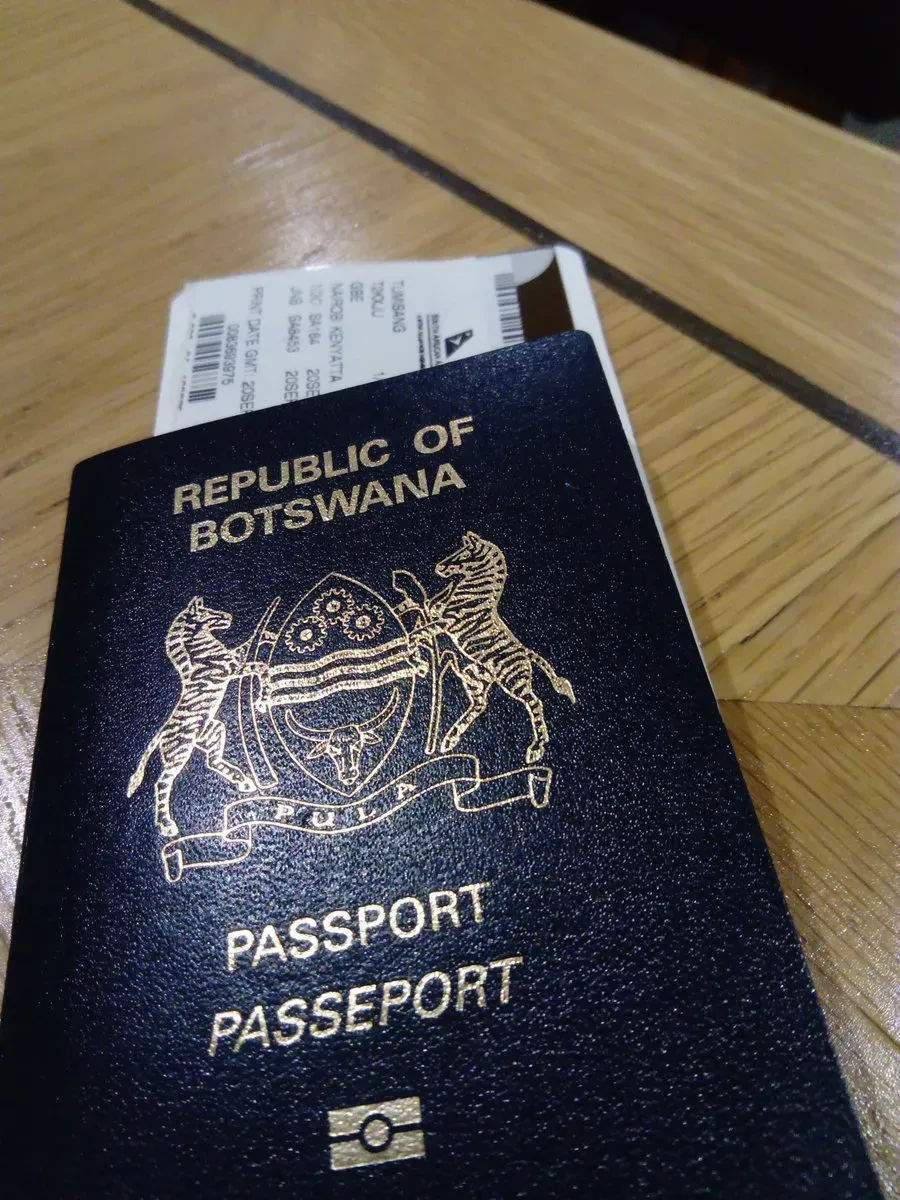
The recent adjustment to Botswana's passport fees is not merely a budgetary shift but a necessary response to a decade of stagnant pricing in the face of global inflation. Since the introduction of biometric e-passports in March 2010, the fee for an ordinary passport had remained fixed at P260. However, the technological landscape and the cost of raw materials have shifted significantly in the intervening sixteen years.
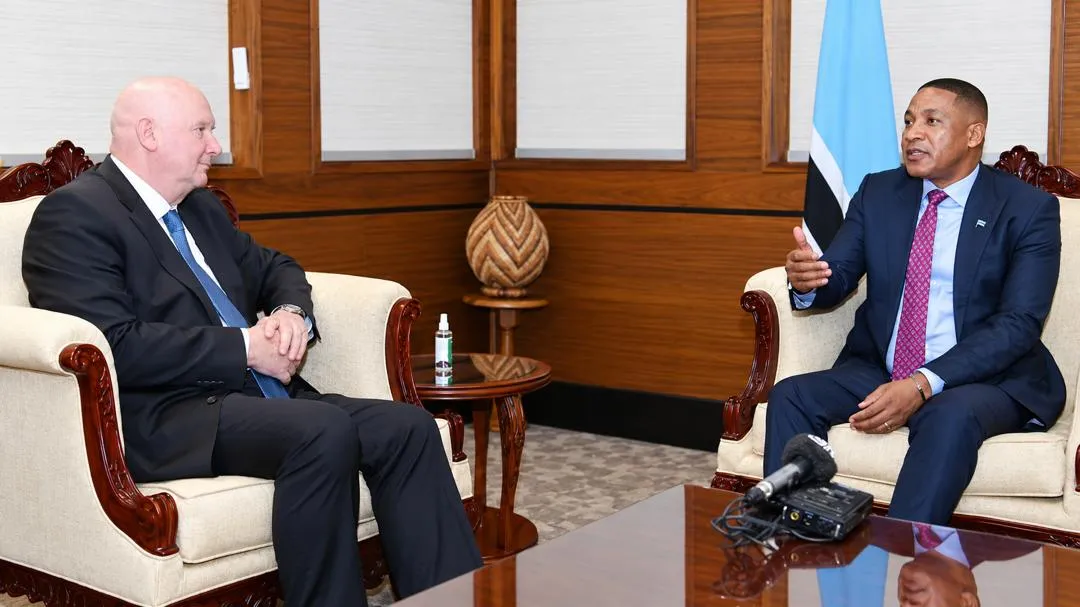
Retired Major General Puis Mokgware, Minister of Labour and Home Affairs, has clarified that the primary driver is the massive gap between the retail price and the actual production cost. Currently, the cost to produce one secure document is estimated at roughly P19,200 (approximately €1,250). This discrepancy highlights the heavy investment required to maintain a passport that meets international security standards.
The decision reflects a broader tension between maintaining state-of-the-art security and ensuring public affordability. By updating the fees, the government aims to safeguard the quality of the biometric system, which is essential for Botswana's standing in the global travel community.
In an Interview with BOPA Ms. Lopang Thebe, Acting Director of the Department of Immigration and Citizenship, emphasized that passports are not standard paper documents; they are sophisticated security assets. Maintaining these documents requires continuous investment in advanced technology, including specialized printers and high-security materials sourced from international markets.
As global supply chains fluctuate, the cost of sourcing these specialized components and the subsequent maintenance of the machinery have risen. The department's decision-making process involved a thorough analysis of these production expenses alongside a comparative study of regional pricing to ensure the new rates remain justifiable.
New passport fee schedule: A detailed breakdown
The revised fee structure, effective from November 1, 2025, introduces specific pricing for different categories of travelers and document types. The goal is to create a tiered system that accounts for the level of service and the type of document issued.
Document Type | New Fee (BWP) |
|---|---|
Ordinary Passport (Adult) | P400 |
Children (Under 16) | P200 |
Official Passport | P600 |
Diplomatic Passport | P800 |
Emergency Travel Document | P100 |
Replacement (Lost/Stolen/Soiled) | P2,000 |
The increase for an ordinary passport from P260 to P400 represents a P140 adjustment. While this is a notable change for households, it is framed by the Ministry as a move toward sustainability in document issuance.
One of the most significant changes is the P2,000 fee for replacing lost, stolen, or damaged e-passports. This high cost is intended to encourage citizens to handle their travel documents with greater care. However, the Department of Immigration and Citizenship has introduced a layer of administrative empathy for those facing genuine hardship.
Ms. Thebe noted that the P2,000 fee is not applied blindly. In cases involving unforeseen circumstances such as fires, floods, or documented theft, the department will assess the situation. Applicants who provide supporting evidence, such as police statements, may be eligible for a waiver or a reassessment of the charge. A dedicated board meets weekly to scrutinize these cases, specifically to prevent the exploitation of the waiver system by repeat offenders.
To provide context for the price hike, the government has compared Botswana's new rates with those of neighboring SADC nations. The objective is to demonstrate that despite the increase, Botswana remains a competitively priced option for travel documentation.
When compared to Zimbabwe, where an ordinary passport reportedly costs approximately P2,300 (US$170), Botswana's P400 fee is significantly more affordable. Similarly, South Africa's rate of roughly P498 (R600) and Namibia's P433 (N$400) place Botswana's new pricing within a favorable range. Even compared to Zambia (approx. P280) and Lesotho (approx. P130), the Botswana fee is positioned as a middle-ground option that balances cost with high-tier security features.
FAQ
How much does it cost to produce one Botswana passport?
The estimated production cost for one secure biometric document is approximately P19,200.
Why are the passport fees changing now?
The adjustment addresses a decade of stagnant pricing and the escalating costs of high-security biometric production and specialized equipment.